
Decorative LED Display for Restaurants: A Planning Guide for Immersive Dining Interiors
How to plan a decorative LED display for a restaurant, from atmosphere and guest sightlines to ambient light, content, installation details and service access.
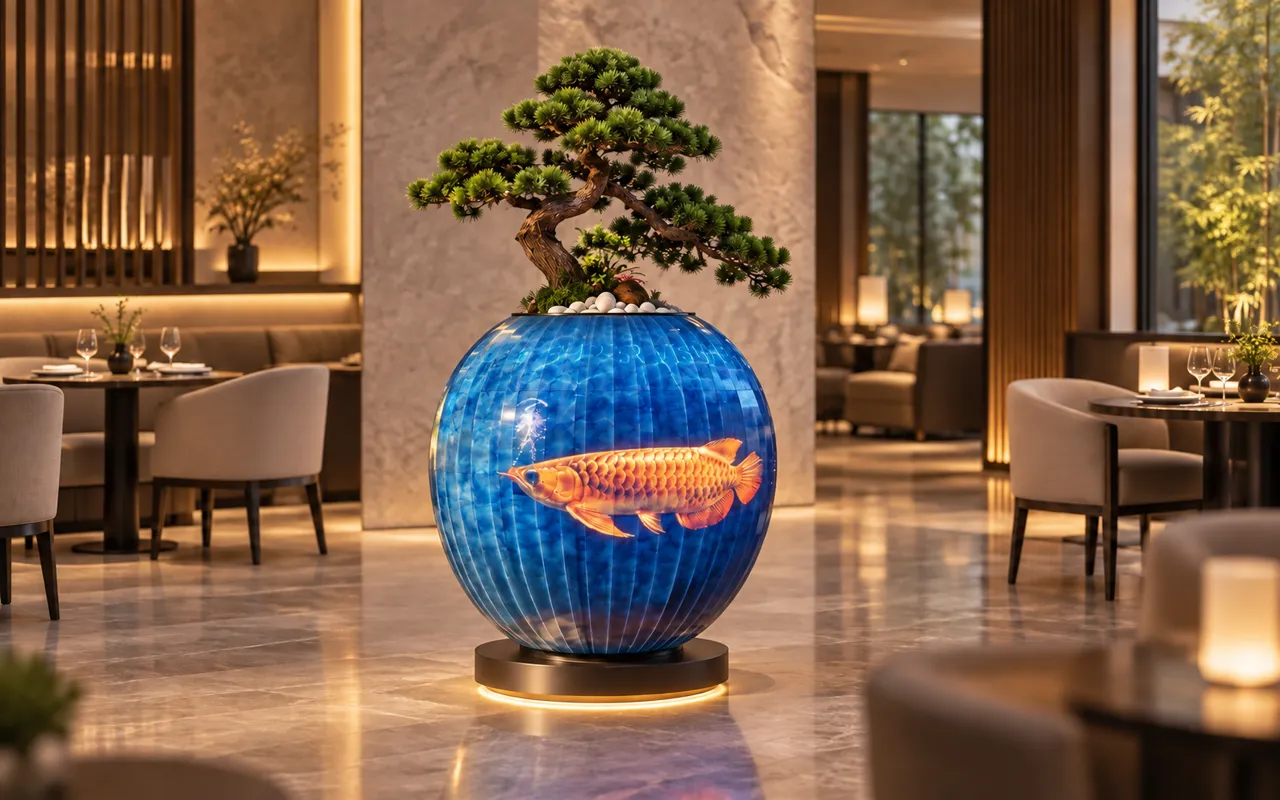
A decorative LED display can give a restaurant a visual identity that changes throughout the day without changing the interior architecture. Used with restraint, it can bring movement to a feature wall, bar backdrop, private dining room or arrival zone while still supporting the food, lighting and conversation that define the guest experience.
The strongest restaurant installations are planned as part of the interior concept. This guide covers the design and technical questions worth resolving before the finishes, joinery and services are fixed.
Let the dining experience set the visual brief
Begin with the mood the restaurant wants to create at lunch, dinner and late evening. A bright all-day dining room, a dark cocktail bar and a chef's-table space need very different visual behaviour.
For most dining environments, content should reinforce the atmosphere rather than compete for attention. Slow botanical motion, abstract textures, changing colour studies and restrained visual art can work well when designed for the wall's proportion. Fast cuts, high-contrast advertising loops and excessive brightness can make a room feel less comfortable for guests.
Map guest sightlines before defining the display area
Review the wall from the entrance, host stand, bar stools, primary tables and circulation paths. This identifies whether the display is a focal point, a background layer or an occasional visual reveal. It also informs the appropriate screen size, height and pixel-pitch direction.
Choose the final configuration from the closest normal viewing position, not only the room's overall dimensions. In restaurants, guests may be seated close to a feature wall for a long period, so fine detail, glare and content pace all matter.
Balance screen brightness with food, faces and lighting
Restaurant lighting is deliberately layered: daylight, decorative pendants, table lighting, bar lighting and reflections from glass or polished stone may all affect the display. A technically bright screen is not always the right visual solution.
During the design review, identify:
- Daylight and direct reflections at different times of day.
- The restaurant's planned lighting scenes.
- Whether brightness should vary between daytime and evening service.
- The intended media palette and how it interacts with food presentation.
- Sightlines from adjacent tables and private dining areas.
This allows the content and display treatment to support the room instead of becoming a source of visual fatigue.
Coordinate the feature before construction starts
A clean decorative LED installation needs a coordinated zone behind the finished surface. The interior contractor, millwork team, electrical contractor and AV team should agree the display opening, mounting structure, cable routes and service path before surrounding finishes are released.
The drawing set should address:
- Finished opening dimensions and edge details.
- Wall substrate, mounting method and load path.
- Power isolation, signal routes and control-equipment location.
- Ventilation allowance.
- Front-service access or another viable maintenance strategy.
- How the display aligns with stone joints, timber grain, metal trims, shelving or planting features.
Resolving these items early protects both the design intent and the restaurant's operating schedule.
Make content operation part of the opening plan
Agree who will provide the media, what should play by default and how content will be updated after opening. The content library should be produced for the display's exact aspect ratio and visible area. A small set of well-designed daypart sequences is often more useful than a large library of generic video.
The project handover should document the display configuration, control method, service route, recommended spare parts and the support contact for the operating team.
Review the restaurant wall early
TextureLED supports restaurant LED display concepts that need a decorative, architectural approach. For a Decorative LED Display, share a layout, wall elevation, material references or a visual brief before joinery and finishes are finalised. Typical production is 15–30 days after the confirmed scope is released; final configuration, documentation and logistics are reviewed for each destination.
Planning a similar space?
Share your wall dimensions, material references and viewing conditions. We can review a suitable product and installation route.
Discuss your project