
Texture LED Screen for Hotel Lobbies: A Planning Guide for Architects
How to specify a texture LED screen for a hotel lobby, from viewing distance and ambient light to flush installation, service access and content planning.
A hotel lobby LED wall should feel like part of the arrival experience, not like a conventional advertising screen placed on an otherwise finished wall. A texture LED screen gives designers a different starting point: it can carry quiet digital art, material-inspired motion or a branded moment while the display, edge detail and wall composition are planned as one architectural surface.
This guide covers the decisions architects, interior designers and contractors should coordinate before a hotel lobby wall is built.
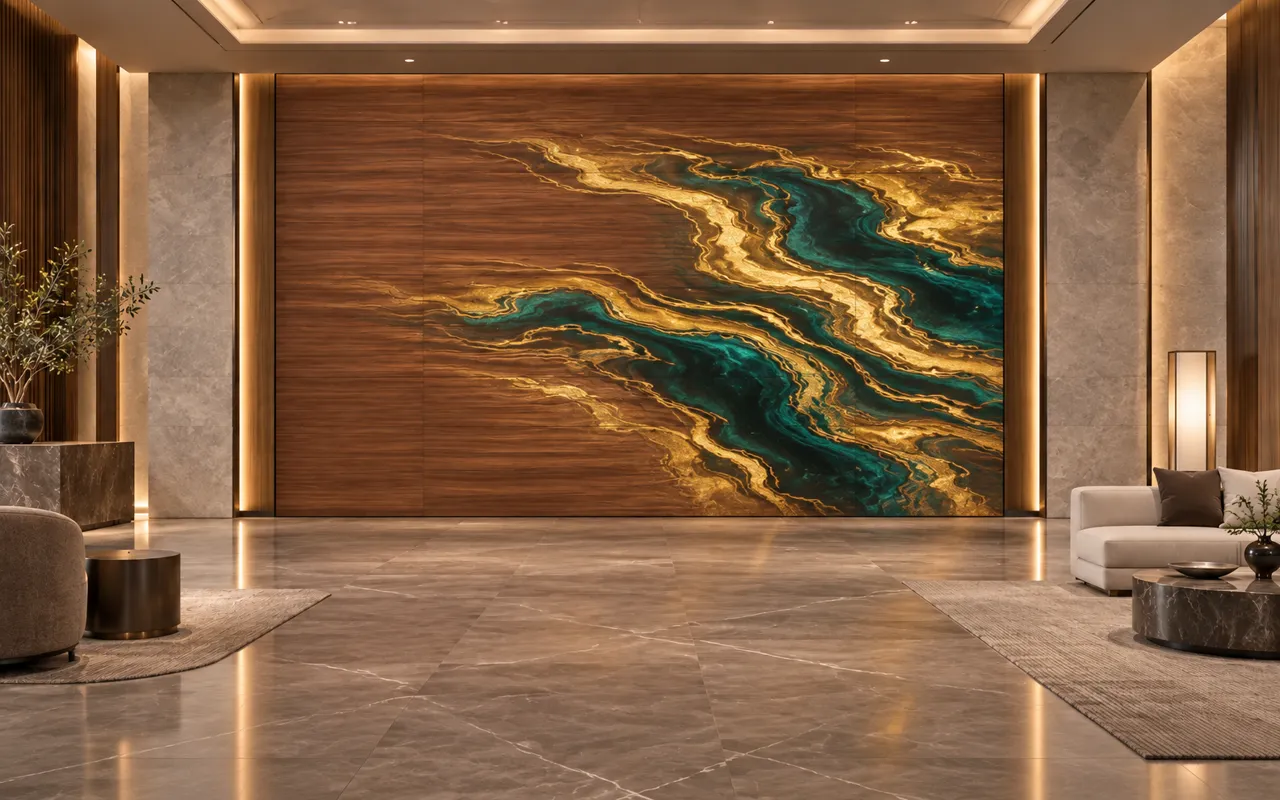
Begin with the guest journey
Map where guests first see the wall, how close they will stand, and what the display should communicate at each moment. A backdrop behind reception has different requirements from a long corridor feature, lift lobby or lounge focal point.
For many hospitality interiors, slow art-led motion and low-glare visual textures are more appropriate than fast promotional video. The content, aspect ratio and brightness strategy should support the atmosphere of the hotel rather than compete with it.
Select pixel pitch from the nearest regular viewing point
The nearest normal guest position should guide the technical configuration. Reception queues, lounge seating and circulation routes may bring people close to the display, even when the lobby itself is large.
A fine-pitch configuration can suit detailed architectural content and closer viewing. The final pixel pitch should be reviewed against the display dimensions, ambient light, content style and budget. Sharing a plan, elevation and a few interior renderings early helps avoid selecting a configuration from a generic distance rule alone.
Plan the wall opening before finishing trades begin
A refined flush installation relies on details hidden behind the visible surface. Coordinate the display zone with the interior contractor, millwork or stone fabricator, electrical contractor and AV team before marble, timber, metal or paint finishes are fixed.
Confirm the following in the project drawing set:
- Finished opening dimensions and permitted edge tolerances.
- Mounting structure, wall substrate and load path.
- Power, signal and control equipment locations.
- Ventilation allowance and isolation access.
- Front-service access or another practical maintenance route.
- The relationship between the display edge and surrounding joints, trims or material grain.
These are architectural coordination questions, not after-installation adjustments.
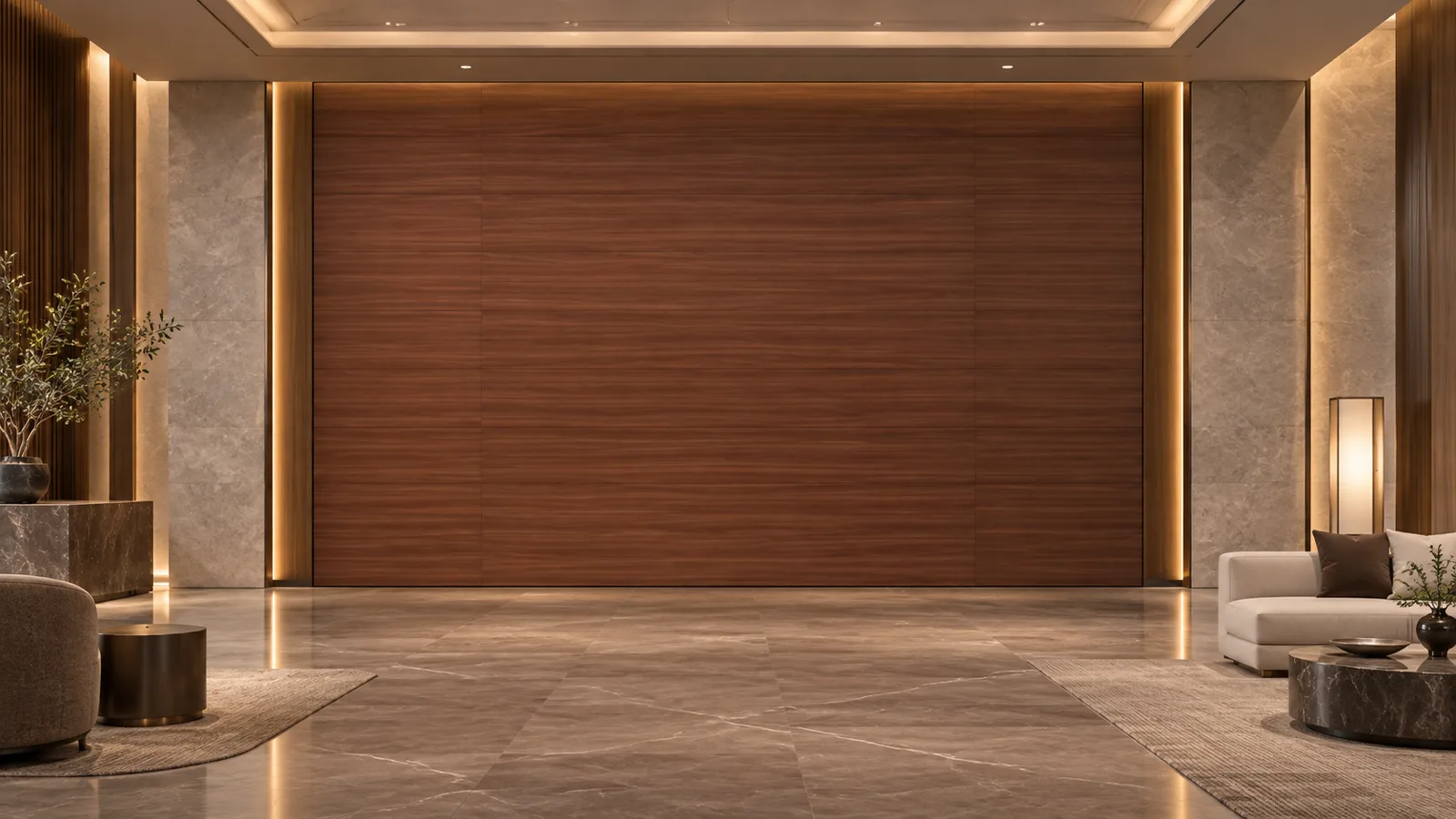
Screen off
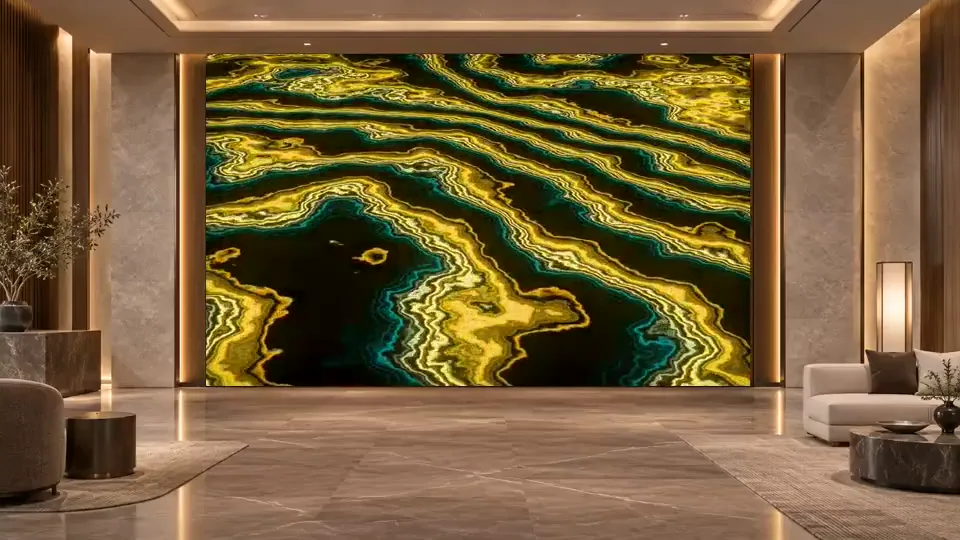
Screen on
Design the off-state as part of the concept
In a premium lobby, the display also needs to make sense when it is not playing. The best approach is to discuss the desired visual language at the quotation stage: surrounding materials, colour palette, reflectivity, lighting direction and edge treatment.
An optical surface treatment, matte low-glare finish and considered edge detail can help the display sit more quietly within the overall wall composition. Physical material references and representative lighting conditions are useful for reviewing this relationship before production.
Allow for real ambient-light conditions
Daylight at a glazed entrance, decorative pendant lighting and reception task lighting all affect how content reads. A display that looks comfortable in a dark showroom may need a different brightness range or content treatment in a sunlit hotel arrival zone.
During planning, identify the brightest time of day, direct reflections and whether the hotel wants automatic brightness behaviour. A restrained content palette is often as important as the technical brightness setting for preserving a premium impression.
Define the content and operational handover
Before opening day, agree who supplies the media, what plays by default, how content is updated and what technical team will support the installation. Create content specifically for the wall's aspect ratio and guest viewing speed. Abstract motion, digital art, subtle material studies and seasonal sequences generally age better in hospitality interiors than standard advertising loops.
The handover should also cover the selected configuration, module layout, service method, control system, spare-parts recommendation and project documentation required for the destination market.
Start with a wall review
TextureLED supports hotel lobby LED wall concepts with project-led configuration and installation coordination. For a texture LED screen, share a plan, elevation, wall photo or reference render before the recess and finishes are finalised. Typical production is 15–30 days once the confirmed scope is released, with final timing, documentation and logistics reviewed for the project.
Planning a similar space?
Share your wall dimensions, material references and viewing conditions. We can review a suitable product and installation route.
Discuss your project