Texture LED Screen for Luxury Retail: A Design Guide for Brand Environments
How to integrate a texture LED screen into a luxury retail interior, from storefront and customer sightlines to ambient light, material coordination, content and maintenance.
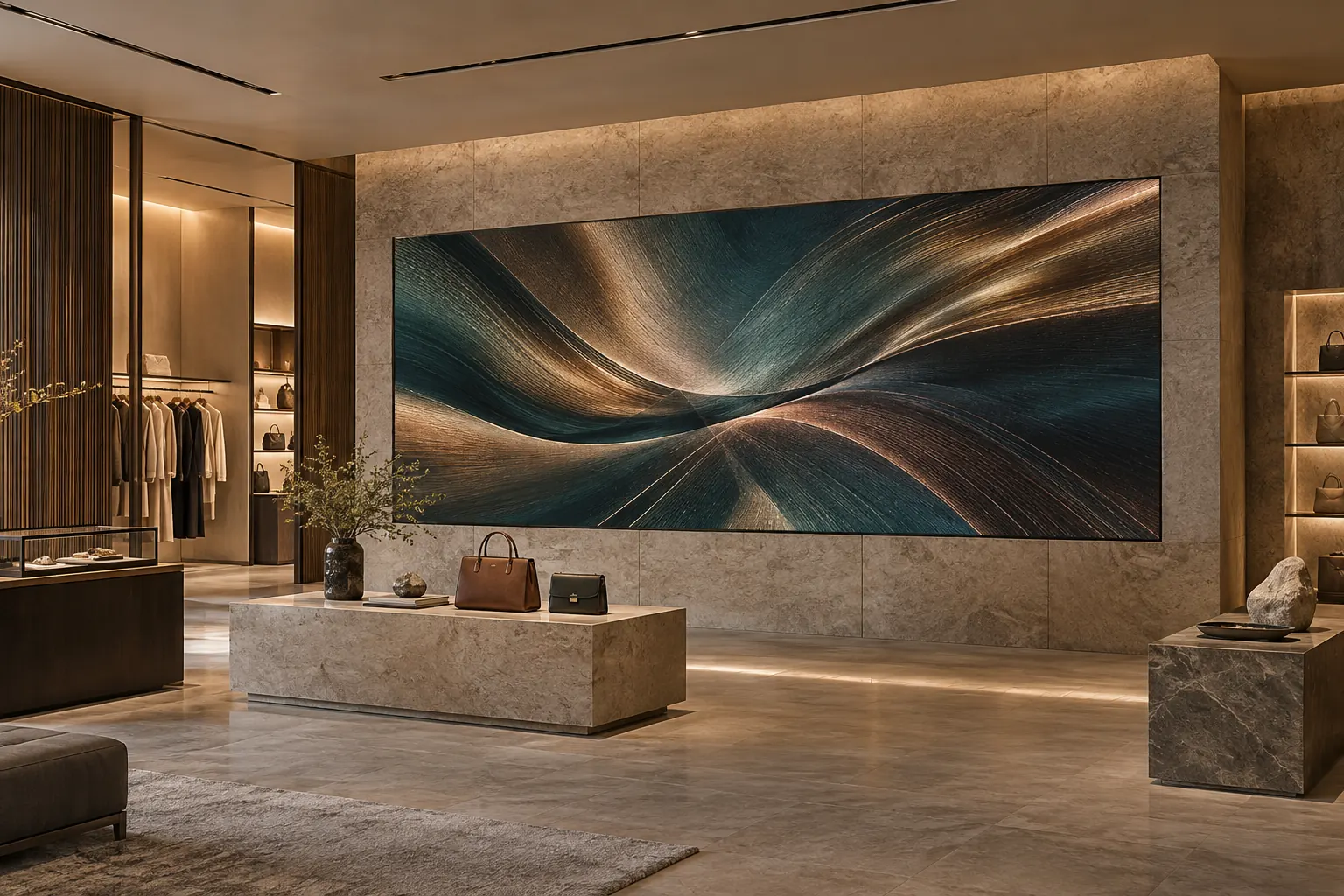
Luxury retail interiors rely on material, light and controlled visual hierarchy to make a brand feel distinctive. A texture LED screen can add a changing layer to that environment: it can introduce digital art, seasonal storytelling or product-led motion while retaining the architectural character of a stone, timber, metal or fabric feature wall.
To achieve that result, the display needs to be planned as part of the store concept rather than added after the finishes are complete. This guide covers the questions design teams should resolve before the wall, lighting and content direction are finalised.
Define the display's role in the customer journey
Start with where customers encounter the display: through the storefront, at the threshold, along a main circulation path, behind a service counter or within a private client area. Each position creates a different opportunity for content and a different set of viewing conditions.
A storefront-facing display may need to respond to daylight and longer viewing distances. An interior feature wall can prioritise texture, material integration and quieter brand storytelling. Decide whether the screen is intended to attract, orient, reveal a collection or simply enrich the atmosphere before selecting its size and visual language.
Coordinate content with the brand's material palette
Luxury retail content should not be treated as a generic video playlist. The most effective sequences are designed for the display's aspect ratio, the pace of customer movement and the brand's physical palette. Slow editorial motion, abstract material studies, craftsmanship details and carefully edited campaign imagery often feel more aligned with a premium environment than fast promotional loops.
Set a default visual state for quiet trading periods and establish how seasonal campaigns will be supplied and updated. This keeps the display intentional after the launch installation has passed.
Evaluate daylight, reflections and close viewing
Retail walls often sit beside glazed façades, mirrored surfaces, polished stone or illuminated shelving. These conditions affect glare, contrast and perceived colour. Review the space at the brightest time of day as well as in the planned evening lighting scene.
The closest regular customer position should guide the configuration. Fine-pitch LED can suit detailed visual textures and closer viewing, but the final selection must account for screen dimensions, content type, ambient light and budget. A storefront elevation, lighting plan and a few material references give the technical team a more useful basis than dimensions alone.
Detail the screen and surrounding wall as one system
For a texture LED screen to feel embedded, the opening, edge treatment, mounting structure and service route need coordination before the surrounding wall is fabricated. Bring the interior contractor, shopfitting team, electrical contractor and AV team into the review early.
Confirm the following before final production:
- Finished opening size, alignment and tolerances.
- Wall substrate, mounting approach and load path.
- Relationship to stone joints, timber grain, metal trims and shelving lines.
- Power isolation, signal routes and control-equipment location.
- Ventilation allowance and practical front-service access.
- Site protection while remaining finishes are installed.
These details reduce late-stage site changes and protect the intended visual precision of the retail environment.
Plan a practical support and refresh path
The store team needs a simple way to manage content and understand the service route. At handover, document the selected configuration, control method, module layout, maintenance access and recommended spare parts. For multi-market rollouts, confirm the available documentation and logistics plan against the intended destination before release.
Start with a concept review
TextureLED supports luxury retail LED display concepts that require visual and technical coordination from the first wall review. For a Texture LED Screen, share a storefront elevation, interior rendering, material board or campaign reference before shopfitting begins. Typical production is 15–30 days after the confirmed scope is released; final configuration, documentation and delivery timing are reviewed for each project.
Planning a similar space?
Share your wall dimensions, material references and viewing conditions. We can review a suitable product and installation route.
Discuss your project