
How to Integrate a Texture LED Screen into a Marble Feature Wall
A practical planning guide for architects and interior designers specifying a texture LED screen within a marble, stone or other premium feature wall.
A texture LED screen can turn a feature wall into a living surface while preserving the material language of an interior. The best results are not achieved by treating it as a conventional video wall. It should be coordinated as an architectural element from the early design stage: surface, sightlines, structure, power, content and service access all need to work together.
This guide outlines the questions worth resolving before a texture LED display is specified into a marble, stone, wood or metal feature wall.
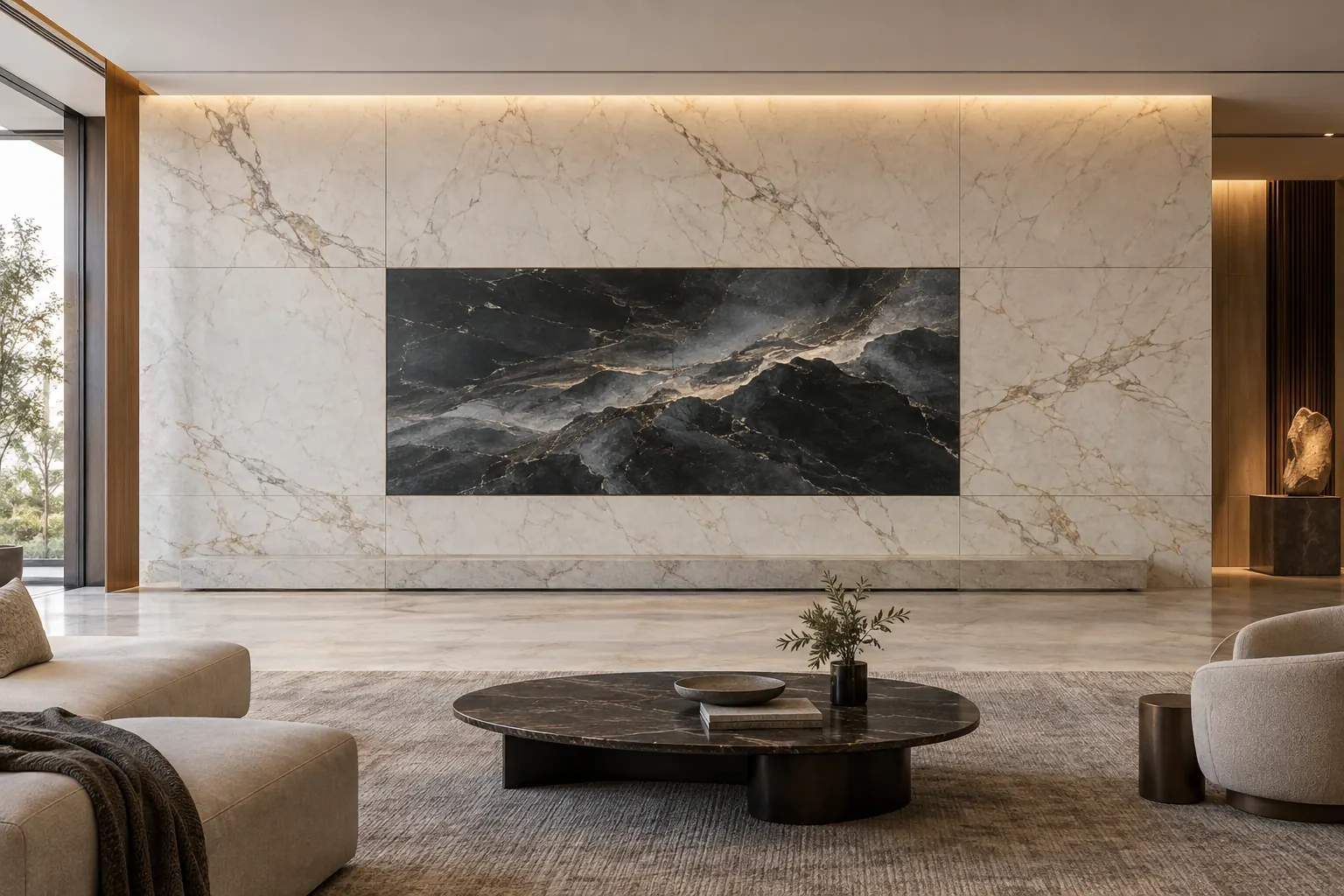
Start with the wall's role in the space
First define what the wall needs to do when the display is on and when it is off. In a hotel lobby it may create a changing focal point. In a private residence it may alternate between a calm artwork and subtle ambient motion. In luxury retail, it may support a campaign or seasonal installation.
That decision informs the display area, aspect ratio and content approach. A screen that plays fast commercial video needs different brightness and viewing conditions from one designed to show slow-moving art. For premium interiors, restraint usually delivers the stronger result: the display should belong to the wall rather than overpower it.
Match pixel pitch to the real viewing distance
Pixel pitch should be selected from the closest normal viewing position, not from the far end of the room. Reception desks, lounge seating and circulation routes can all put people close to the wall.
A fine-pitch configuration, such as a P1.25 reference configuration, may suit detailed textures and close architectural viewing. The final selection should account for the display size, content type, ambient light and budget. A project drawing or elevation lets the technical team assess this early, before a recess or mounting structure is fixed.
Coordinate the recess, structure and access before finishes begin
The display needs a planned installation zone behind the visible surface. This typically includes a mounting structure, power and signal routes, ventilation allowance and an accessible service path. A clean flush finish is possible only when these details are resolved with the interior contractor and wall fabricator.
Ask the project team to confirm:
- The finished opening size and tolerance around the display.
- The wall substrate and the load-bearing approach for the mounting structure.
- Cable routes, power isolation and control equipment location.
- Front-service access or another practical maintenance route.
- The relationship between the LED surface and adjacent marble joints, metal trims or wood grain.
These decisions protect the visual intent and reduce site rework later.
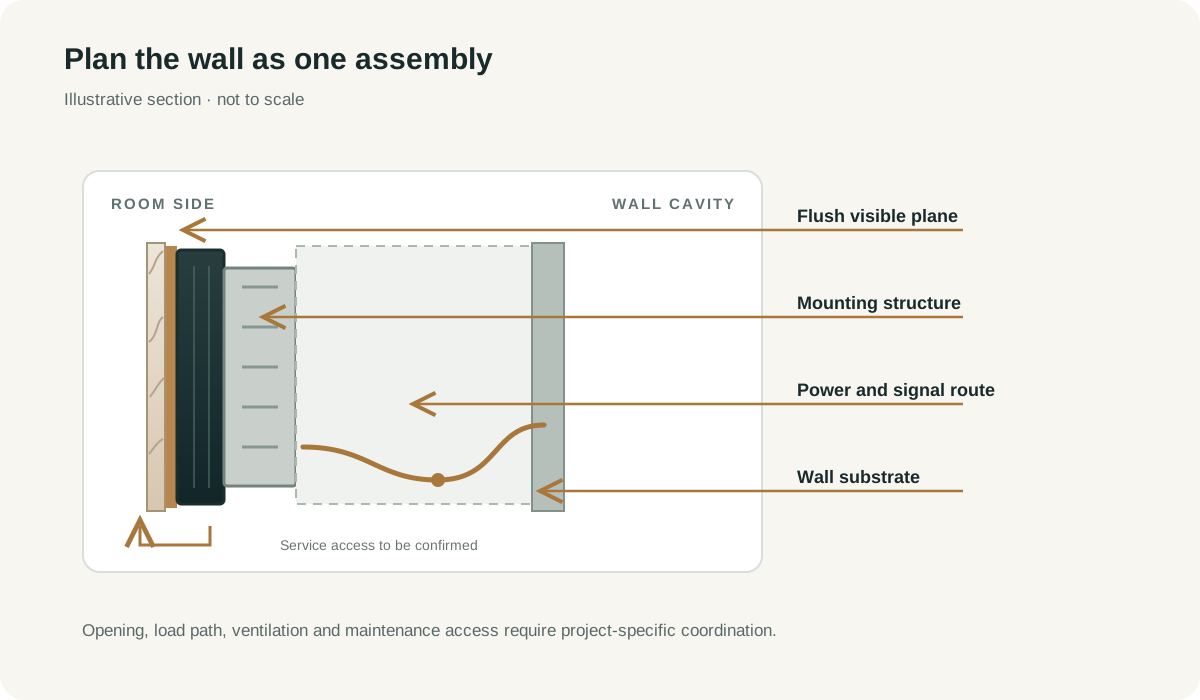
Illustrative planning section, not a construction drawing. Confirm the opening, structure, ventilation and service route for the selected system and site.
Design the off-state as carefully as the on-state
For texture LED projects, the off-state is often the key design concern. Designers want to avoid a large black rectangle interrupting an otherwise refined material wall.
Share the intended material sample, colour palette and finish direction at the quotation stage. This makes it possible to evaluate a compatible optical treatment, low-glare surface and edge finish. It is also worth reviewing the planned media: dark, low-contrast content can make the transition into the surrounding wall feel quieter than bright, high-saturation video.
Physical samples and project footage are useful here, but they should be assessed under representative lighting. A material that looks integrated in a showroom can behave differently under direct retail lighting or a sunlit lobby.
Treat content as part of the architectural specification
The display is only half the experience. Content should be created for the aspect ratio and placement of the installation. Slow abstract motion, digital textures, art-led sequences and restrained brand storytelling usually work more naturally in high-end interiors than standard advertising content.
Specify who will provide the media, how it will be updated and what should play by default. A simple content plan prevents the finished display from being used as an afterthought.
Confirm the project deliverables and support path
Before approval, request a clear configuration summary covering the selected pixel pitch, module size, dimensions, control system, installation method and service strategy. For international projects, it is also sensible to confirm the available documentation for the intended market, the production schedule, packing approach and spare-parts recommendation.
TextureLED provides project-led support for art, texture and decorative LED displays. Standard configurations typically follow a 15–30 day production range, subject to the confirmed scope and materials, and include a two-year project warranty. Final specifications, documentation availability and logistics timing are confirmed against each project.
Discuss your wall concept early
If you are working on a marble feature wall, hospitality lobby, luxury retail interior or private residence, send us a reference image, plan or elevation. We can help review the display zone before the wall construction is finalized.
Planning a similar space?
Share your wall dimensions, material references and viewing conditions. We can review a suitable product and installation route.
Discuss your project