
Art LED Display vs Texture LED Screen vs Decorative LED Display: Which Fits Your Interior?
A practical comparison of art LED displays, texture LED screens and decorative LED displays for architects and interior designers planning premium hospitality, retail and residential projects.
An architectural LED display should be selected from the role it needs to play in the space, not only from a screen specification. A wall designed to show curated artwork needs a different visual treatment from a material-led lobby surface or a decorative restaurant feature.
TextureLED works across three product directions: Art LED Display, Texture LED Screen and Decorative LED Display. All can be developed as project-led architectural installations, but each begins with a different design intention.
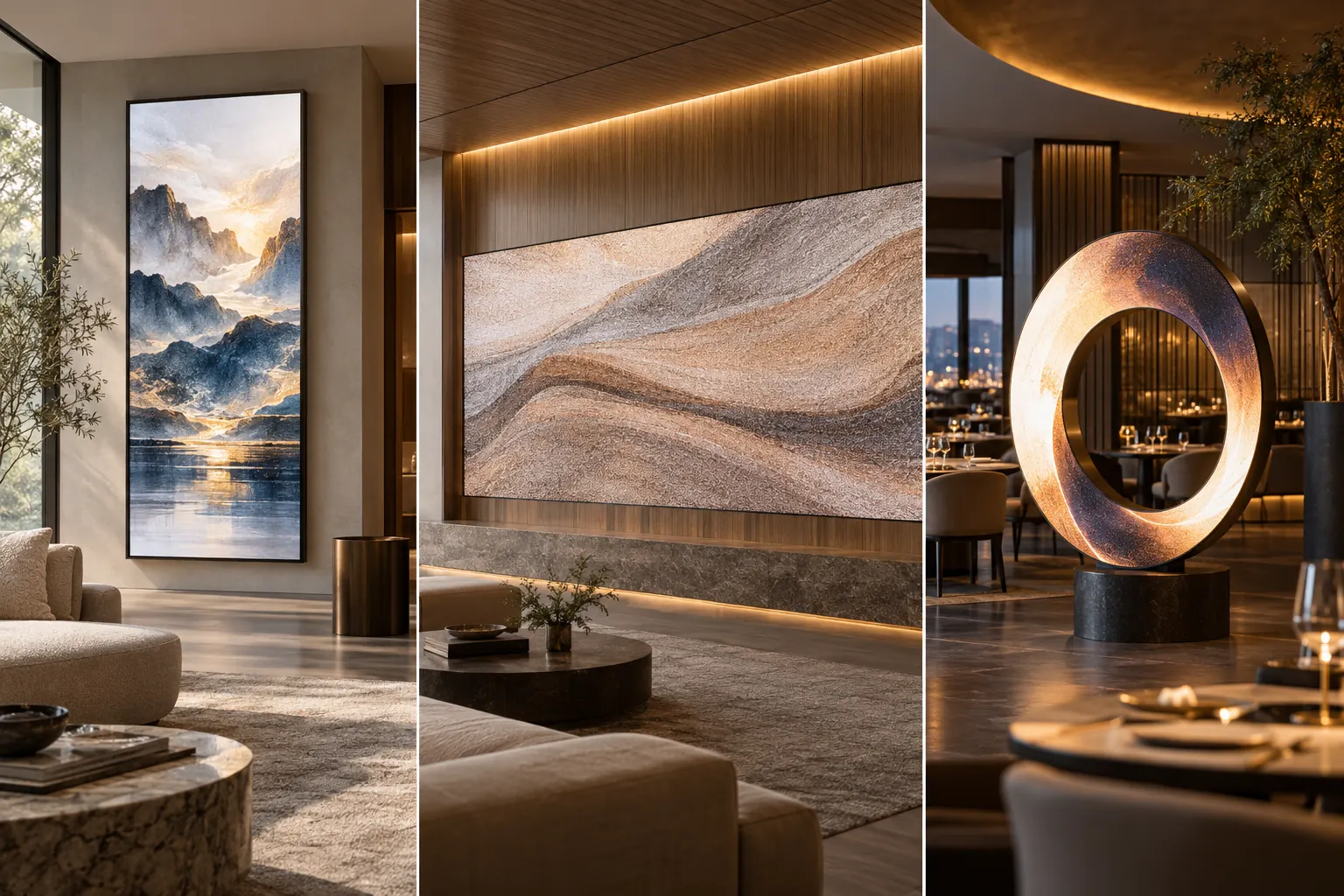
A quick comparison
| Product direction | Best starting point | Typical interior role | Early design priority |
|---|---|---|---|
| Art LED Display | Art, still imagery and calm motion | Residential feature walls, private lounges, hospitality art moments | Viewing distance, artwork aspect ratio and wall integration |
| Texture LED Screen | A digital surface that sits within the material language of a wall | Hotel lobbies, luxury retail and premium feature walls | Off-state, low-glare finish, flush details and surrounding materials |
| Decorative LED Display | A visual object or feature that adds atmosphere to a space | Restaurants, bars, retail moments and experiential hospitality | Guest sightlines, ambient light, content pace and operating rhythm |
The final configuration for any direction still depends on display size, pixel pitch, content, lighting, structure, service access and the destination market. The comparison below helps identify the right starting brief.
Choose an Art LED Display when the wall is an artwork destination
An Art LED Display is the most appropriate starting point when the display is intended to behave like curated art within the interior. It is suited to residences, private clubs, suites, reception areas and refined hospitality spaces where a still artwork may be the default state and motion is used selectively.
The early questions are visual: What artwork or media will the wall show? Where will people sit or stand in relation to it? How should the display align with the room's furniture, lighting and material palette? The content library and aspect ratio should be considered before the wall opening is finalised.
An art-led direction does not mean that the screen must imitate a conventional framed painting. It means the wall is conceived around visual composition, controlled motion and long-term daily use rather than a campaign screen or a standard video wall.
Choose a Texture LED Screen when material integration is central
A Texture LED Screen is the right starting point when the design challenge is to introduce digital movement into a stone, timber, metal or otherwise material-led feature wall. It is particularly relevant for hotel lobbies, luxury retail interiors and other spaces where the wall must remain visually composed when the display is quiet or off.
The most important review points are the surrounding finish direction, reflectivity, edge treatment, glazing or ambient light, recess depth and service route. Designers should share material samples, wall elevations and reference imagery early so the display surface and adjacent wall can be considered together.
For a more detailed hospitality workflow, see our guide to a texture LED screen for hotel lobbies. For a material-wall application, see how to integrate a texture LED screen into a marble feature wall.
Choose a Decorative LED Display when atmosphere and experience lead
A Decorative LED Display is often best when the LED element is intended to create an experiential layer in a restaurant, bar, retail space or public-facing hospitality setting. The display can work as a feature wall, backdrop or spatial accent, with content that changes the mood through the day or supports a specific brand moment.
The design conversation should begin with guest experience: Which sightlines matter? How long will guests look at the display? What lighting scenes will be used at lunch, dinner or evening service? What content pace will feel appropriate near tables, merchandise or social areas?
It is useful to define the default visual state and content-update process before opening day. This gives the operator an intentional, repeatable experience rather than a large screen waiting for generic media.
The same project can combine more than one direction
These categories are not rigid. A hotel may use an art-led display in a private lounge and a texture-led wall in the arrival lobby. A luxury retail project may use a material-integrated feature wall for the main brand moment and a decorative LED element in a window or event area.
What matters is that each location has a clear role, content strategy and technical support path. Avoid treating every wall as the same display type simply because all of them use LED technology.
What to share for an initial recommendation
An early review is more effective when the design team can share:
- A plan, wall elevation or simple marked-up rendering.
- Approximate wall dimensions and the nearest regular viewing distance.
- Material references for the surrounding wall.
- Daylight and lighting conditions.
- The intended content direction or brand references.
- Project location, stage and target opening date.
TextureLED can then help frame the appropriate product direction, configuration and installation approach before wall construction is fixed. Typical production is 15–30 days after confirmed scope release; final specifications, documentation, warranty and logistics are reviewed for the project and destination.
Planning a similar space?
Share your wall dimensions, material references and viewing conditions. We can review a suitable product and installation route.
Discuss your project